Skip to content
SHARE TO SOCIAL MEDIA
What is a solar module?
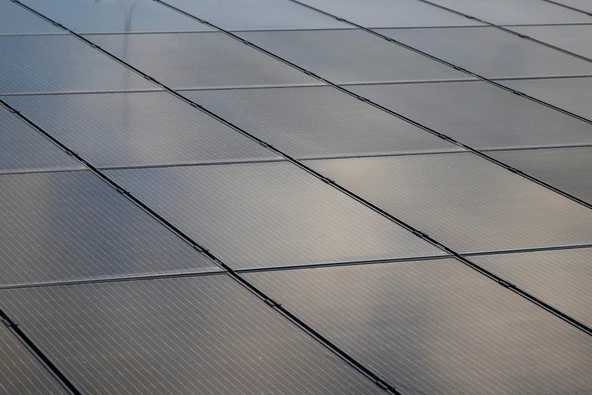
A solar module, commonly called a solar panel, is a unit made up of multiple interconnected solar cells that convert sunlight into electricity.
Solar modules are one component of a larger solar energy system. While the terms “solar module” and “solar panel” are often used interchangeably, “module” is the more technical term used in engineering and industry documentation.
How a solar module works
Solar modules generate electricity using the photovoltaic (PV) effect1:
Sunlight hits the solar cells inside the module
Photons energize electrons in the semiconductor material (typically silicon)
This creates direct current (DC) electricity
An inverter later converts that electricity into alternating current (AC) for household use
This process produces electricity without combustion, moving parts, or direct emissions.
Solar Module vs. Solar Panel vs. Solar System
Term | What it refers to |
|---|---|
Solar module | A single panel made of multiple solar cells |
Solar panel | Common term for a solar module |
Solar energy system | Complete setup including modules, inverter, mounting hardware, wiring and monitoring |
This page focuses specifically on the module itself, not the full system or financing structure.
How solar modules fit into a home energy system
Solar modules are responsible for generating electricity. Other components manage how that energy is used, stored, or sent to the grid.
To learn more about how modules connect to other system components, see:
GO SOLAR
Take control of your energy bills
Reliable power, predictable energy bills
FAQs: Solar Module
A solar module is a group of interconnected solar cells assembled into a weather-protected panel that converts sunlight into electricity.
Yes. “Solar module” is the technical term, while “solar panel” is the more commonly used consumer term.
Most modules are warranted for 25 years or more and continue producing electricity beyond that period at gradually reduced efficiency.
Production depends on module efficiency, sunlight exposure, roof angle, shading, temperature, and overall system design.