Skip to content
SHARE TO SOCIAL MEDIA
More homeowners are finding smart, reliable solutions with energy storage systems. These systems keep your lights on, appliances running, and home comfortable, even when the grid goes down.
Are you curious how these systems work or compare to generators? You’re in the right place. This guide breaks down everything you need to know and shows how Sunrun makes getting backup power easy and worry-free.
Home battery energy storage system
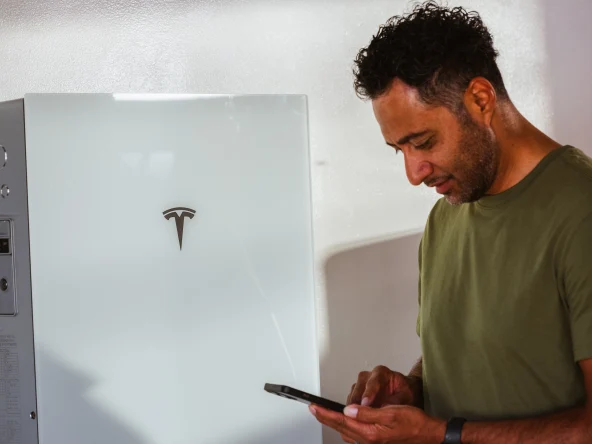
Battery energy storage systems live in your garage or on the side of your home, quietly standing guard over your electricity. These systems store power generated from energy sources like solar. When the grid goes down, they instantly kick in to keep your lights on, your food cold, and your family comfortable.
When electricity rates spike during peak hours, the system draws from stored energy instead of relying on expensive grid power. When your solar panels produce excess energy, they store that power for later, like saving money in the bank.
Simply put, a battery energy storage system gives you control over when and how you use electricity in your home. Instead of being at the mercy of utility companies and their ever-changing rates, you become the manager of your own energy supply.
This kind of energy independence is becoming increasingly valuable as American homeowners are facing a perfect storm of energy challenges that make battery storage more essential than ever. Electricity costs have jumped 5% since 2018, and this upward trend shows no signs of slowing down.1
How battery energy storage systems work
Your battery storage system includes several important pieces that work together like a well-orchestrated team. These include:
Battery cells
These are the heart of your energy storage system. Modern batteries use lithium-ion technology. The same proven tech in your smartphone and electric vehicles, just scaled up for your house. Lithium-ion batteries are low-maintenance and highly efficient, requiring minimal upkeep while delivering long-term, dependable performance.2
Here’s a side-by-side comparison of different lithium-ion batteries in the market today.
System | Energy Capacity | Output Power |
|---|---|---|
Lunar Energy | 20kWh | 9.6 kW Continuous 15 kW Peak (5s) |
Tesla Powerwall 3 | 13.5kWh | 11.5 kW |
Inverter
Solar panels and batteries speak "DC" (direct current), but your home runs on "AC" (alternating current). The inverter bridges the gap, converting solar power into storable energy and stored energy into usable electrical energy.
Smart monitoring software
This is your energy storage system's brain. This technology tracks your energy production, usage patterns, and battery levels 24/7. It automatically decides when to store energy, when to use it, and when to draw from the grid.
Electrical panel integration
This connects everything together. The battery system works with your existing home wiring, so stored power can reach every outlet, light, and appliance, ensuring a reliable electricity supply during outages or high-rate periods.
Pro tip: When comparing battery energy storage systems, pay close attention to energy capacity. Higher energy capacity means more hours of backup power when you need it most.
AC-coupled vs. DC-coupled systems explained
Not all home battery systems are built the same, and how they’re wired matters more than you might think. Whether you're adding storage to an existing solar setup or starting fresh, understanding the difference between AC-coupled and DC-coupled systems can help you get the most out of your battery investment.
AC-coupled systems work great if you already have solar panels or want flexibility for future upgrades. In this setup, your solar panels first convert sunshine into AC electricity for your home, then any excess gets converted back to DC to charge your battery. When you need that stored power, it converts back to AC again. Think of it as a universal translator that works with any existing solar setup.
DC-coupled systems are more efficient for new solar installations. Here, your solar panels' DC electricity flows directly to charge your battery without conversion, reducing energy loss. When you need power from the battery, it converts to AC just once.
Most homeowners don't need to worry about these technical details. Your Sunrun solar advisor will recommend the best configuration for your specific situation, existing equipment, and energy goals.
Types of energy storage technologies
Batteries are undoubtedly the smartest way to store electrical energy for your home, but they’re not the only option. Let’s quickly explore other alternatives and why none of them can match the benefits batteries offer homeowners like you.
Pumped hydro storage
This large-scale system uses gravity to store energy. It pumps water uphill into a high reservoir when energy is cheap or abundant. When demand increases, the water flows back down through turbines to generate electricity.3
Utilities rely on pumped hydro storage to balance loads and store gigawatt-hours of energy. But it requires massive reservoirs, vertical elevation, and dedicated land, stuff you won’t find in a neighborhood. Pumped hydro storage is efficient at scale, but completely impractical for homes.
Seasonal thermal energy storage systems
Thermal systems store heat or cold, not electricity. They include technologies like molten salt tanks, chilled water storage, and phase-change materials.4 Commercial buildings use them to shift HVAC loads and improve energy efficiency, often saving big on cooling or heating costs.
Thermal energy storage systems can’t generate electricity, so they won’t power your lights, appliances, or phones. They're great for managing air temperature, not keeping the power on.
Compressed-air energy storage (CAES)
CAES uses large industrial compressors to push air into underground storage caverns or pressurized tanks.5 When energy demand rises, the system releases this air through turbines to generate electricity.
Compressed air energy storage systems work best on the grid because they require a lot of space, complex safety controls, and a sizable upfront investment. Utilities use them to store excess energy from renewable energy sources. However, they are not safe, simple, or scalable for residential use.
Flywheel energy storage systems
Flywheels store energy as rotational kinetic energy. When you charge the system, it uses electricity to spin a heavy rotor at very high speeds. When you discharge, the system converts kinetic energy back into electricity.
Flywheel energy storage systems respond almost instantly and can deliver short bursts of power with amazing precision. However, they fall short in electricity generation capacity and duration. You wouldn’t use a flywheel to power your home overnight or keep critical systems running during a blackout.
Battery storage vs. other home backup solutions
Not all backup options offer the same convenience, efficiency, or long-term value when it comes to keeping your home powered. Let's compare battery storage with other backup power options.
Battery storage vs. whole-house generators
Energy storage systems offer silent, automatic operation that kicks in within seconds of a power outage. You won't even notice the transition. Your clocks won't reset, and your Wi-Fi stays connected. With solar panels, your battery recharges itself during the day, giving you renewable backup power that can last for days.
Whole-house generators, on the other hand, are loud, require regular maintenance, and burn fossil fuels like natural gas or propane. While they can run indefinitely with fossil fuels, you'll face ongoing costs for fuel, maintenance, and repairs. Plus, that rumbling noise isn't exactly neighborhood-friendly at 2 AM.
Battery storage vs. UPS (Uninterruptible Power Supply) systems
UPS systems provide emergency backup power during brief power hiccups. They'll give you a few minutes to save your work and shut down safely.6 Think of them as a short-term safety net for sensitive electronics.
Energy storage systems are the whole-house solution. Instead of protecting just a few plugged-in devices, they power your entire home through your existing electrical panel. We're talking about a 10-hour electric power supply for essential appliances, not just a few minutes for your laptop.
Battery storage vs. electric vehicle backup
Vehicle-to-home (V2H) backup is a powerful emerging option. Electric vehicles like the Ford F-150 Lightning, paired with a home integration system, can supply your home with backup power for multiple days, thanks to an energy capacity equal to about 10 home batteries.
On the other hand, battery electricity storage systems are designed specifically for home energy management. They integrate seamlessly with solar, recharge throughout the day, and provide long-duration energy storage with 10 hours of runtime and modular scalability.
Pro tip: Pairing a battery with solar isn't just for blackouts. It's a financial strategy to use solar energy during peak utility rates, potentially lowering your monthly electricity bills and maximizing your investment.
Choosing the right energy storage solution
Picking the perfect battery energy storage system for your home doesn't have to feel overwhelming. Think of it like choosing the right car. You want something that fits your daily needs, your budget, and your lifestyle.
That's where Sunrun comes in as your trusted energy expert. We'll guide you through every decision and help you find an energy storage system that delivers exactly the backup power you're looking for.
Before diving into battery specs and brand comparisons, we look at how your family uses electricity. Our Sunrun's expert solar advisors conduct comprehensive assessments that consider:
Your recent utility bills can help you understand your average daily energy consumption.
Peak usage times to pinpoint when your family uses the most electricity.
Seasonal variations in your energy needs.
Assess your family's unique energy patterns and lifestyle needs.
Identify the best battery placement options for your specific home layout.
Custom system design means you get exactly what you need. We'll recommend the right battery capacity and design a system that maximizes your return on investment while meeting your energy independence goals.
Our top-tier technology partnerships give you access to the best battery brands, such as Tesla Powerwall 3 and Lunar Energy. Since we’re not tied to a single manufacturer, depending on where you live, we can recommend the battery that best fits your unique needs and budget.
During your assessment, we'll also evaluate your roof for solar. Since pairing solar with battery storage maximizes energy independence, most homeowners find the combined approach delivers the best long-term value.
We’ll also help you understand your financing options before making any commitments. Whether you prefer predictable monthly payments with our solar subscription (starting at $0 down) or want to own your system outright, we'll walk through the numbers so you can see exactly what each option means for you.
Ready to take control of your energy?
We love to talk solar. Get a free consultation and custom quote tailored to your home's energy usage, roof characteristics, and budget priorities. There's no obligation, no high-pressure tactics, Just honest advice about whether energy storage makes sense for your situation.
Our expert solar advisors will show you exactly how much you may potentially save in your first year with different battery configurations, what your backup power options would be during outages, and how the system would integrate with your current electrical setup. You'll leave the consultation with a clear understanding of costs, timelines, and realistic expectations.
Take the first step toward energy independence, predictable bills, and peace of mind during power outages. Schedule your no-obligation assessment by getting a free quote online or calling our team directly. Your future self and your wallet will thank you.
Take control of your energy bills
Sources
1. https://www.eia.gov/todayinenergy/detail.php
2. https://www.cei.washington.edu/research/energy-storage/lithium-ion-battery/
3. https://www.energy.gov/eere/water/pumped-storage-hydropower
4. https://www.energy.gov/sites/prod/files/2020/10/f79/Thermal%20Energy%20Storage_compliant.pdf
5. https://www.ctc-n.org/technologies/compressed-air-energy-storage-caes
6. https://www.energy.gov/eere/buildings/articles/2016-04-29-energy-conservation-program-test-procedures-uninterruptible